A pharmacist’s guide to beating winter fatigue
Winter can leave even the most motivated among us feeling flat. Shorter days don’t just affect mood – they influence sleep, hormones and how your body manages energy. Research shows clear links between daylight exposure, sleep quality and motivation, which helps explain why winter fatigue is so common.
This guide explains how to support energy using light, sleep timing, vitamin D and stress support.
Why winter fatigue happens (and why you’re feeling so tired)

Key takeaways for busy and tired people.
Winter fatigue is usually a mix of light, hormones and routine changes … here’s how:
- Shorter days disrupt your circadian rhythm (your internal body clock)
- Melatonin (the sleep hormone) rises, making you sleepier during the day
- Serotonin drops, affecting mood and motivation
- Vitamin D levels fall across the UK from October to April, this affects energy and mood
- Stress, poor sleep and less movement drain energy
- Comfort eating can destabilise blood sugar
Your fix? It’s not about pushing through it, but more about supporting your biology properly.
A pharmacist’s view: Winter tiredness and your circadian rhythm
Your circadian rhythm regulates sleep, hormones, metabolism and energy – and it’s highly light-sensitive.
Reduced daylight increases fatigue even when you sleep more. Research also suggests higher winter daylight exposure is linked to fewer depressive symptoms. For some people, this extends beyond “winter blues” into Seasonal Affective Disorder (SAD).
Find out more about SAD, in our blog.
Timing matters as much as sleep duration. You can sleep longer in winter and still feel exhausted if your body clock is out of sync - something modern habits like late nights, screens and low movement make worse.
Vitamin D: The quiet energy saboteur

Between October and April, the UK sun isn’t strong enough for reliable vitamin D production. This leads to widespread seasonal insufficiency, that’s linked to:
- Fatigue
- Low mood
- Muscle weakness
- Reduced immune resilience
Vitamin D doesn’t stimulate energy like caffeine, but it supports muscle function, immune health and metabolic balance - all of which influence how energised you feel. It also plays a role in serotonin synthesis.
This is why the NHS recommends vitamin D supplementation during winter – and why it’s one of the simplest variables to support.
Serotonin, motivation and the winter slump
Less daylight means reduced serotonin activity, which can show up as low motivation, flat mood and brain fog. Late-night scrolling only worsens this by confusing sleep hormones and delaying restorative rest.
Blue-light Blues (and what to do tonight)
Blue light signals “daytime” to the brain, disrupting melatonin release and sleep quality.
Try this tonight:
- Dim the lights 1 to 2 hours before bedtime
- Phone switched to night mode
- No doom-scrolling in bed
Good sleep relies on both enough light in the morning and enough darkness at night - something that becomes harder to regulate as we age.
How to stay energised during winter: our pharmacist’s overview

1. Morning daylight: reset your body clock
Scientists show why early morning light exposure helps reset your body clock.
- Aim for 10 to 20 minutes outdoors within an hour of waking
- Even grey UK mornings deliver useful outdoor light
2. Keep sleep routines boringly consistent
Irregular sleep times destabilise melatonin release.
- Improves sleep quality
- Supports daily energy rhythms
- Reduces stress-related fatigue
The more reliable your sleep and wake times, the better – perfection is far from reality.
3. Move daily, gently is fine.
Movement stimulates:
- Mitochondrial energy production
- Blood sugar balance
- Mood-supporting neurotransmitters
Research shows that even five minutes of walking, stretching and light resistance count. These ‘exercise snacks can work wonders’ if you’re finding the whole exercise thing daunting or even unappealing.
4. Support energy through supplements and nutrition

This is where targeted, pharmacist-formulated supplements can help.
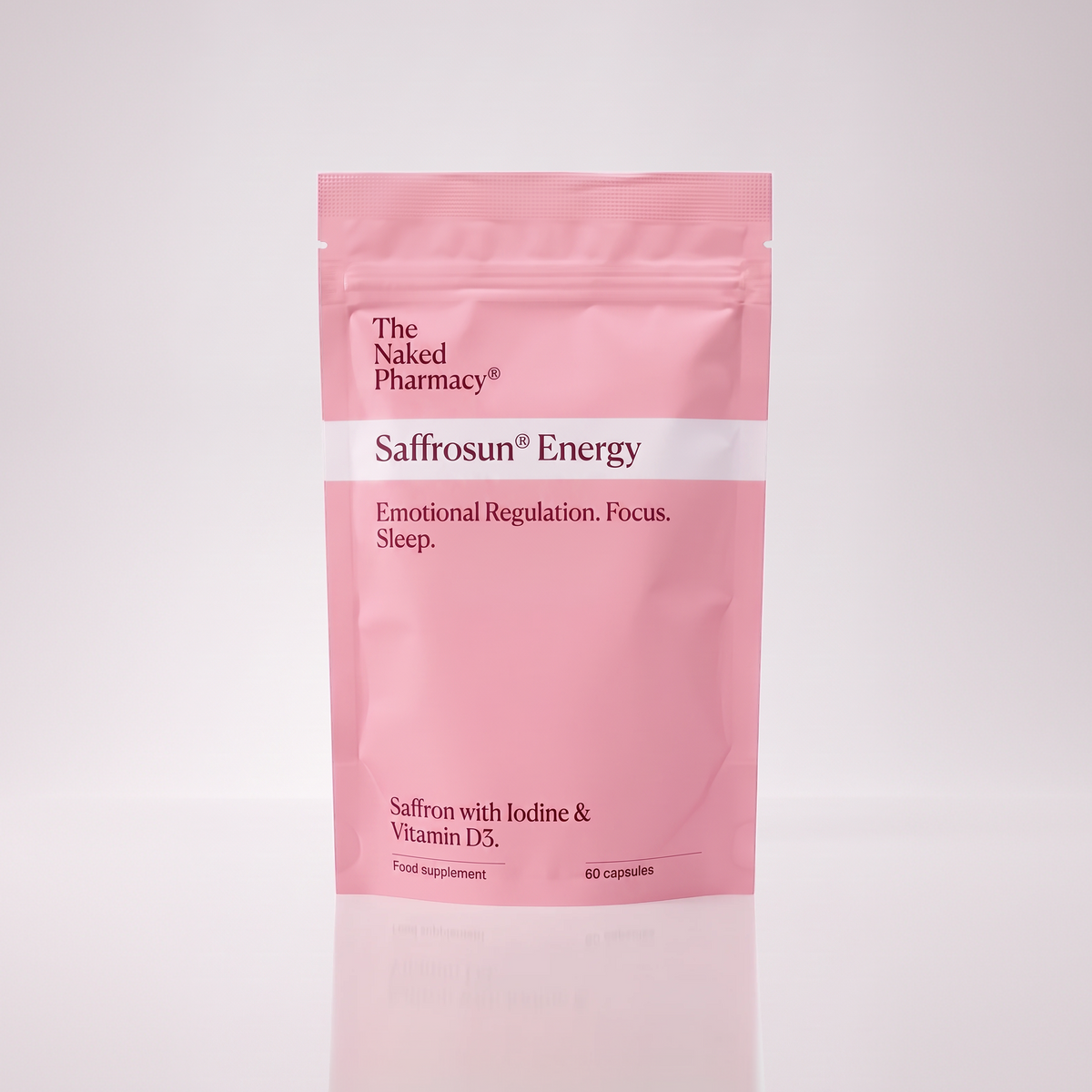
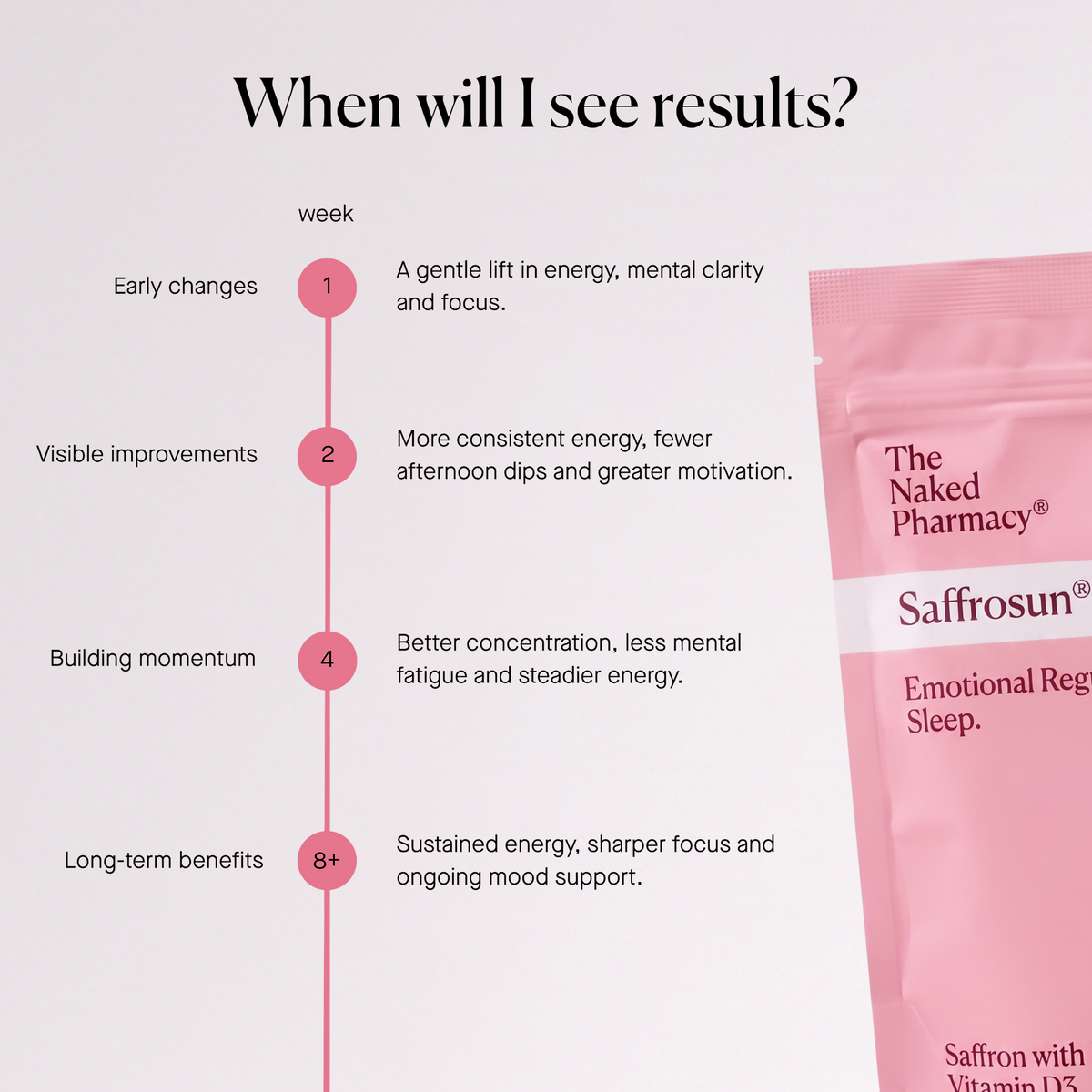
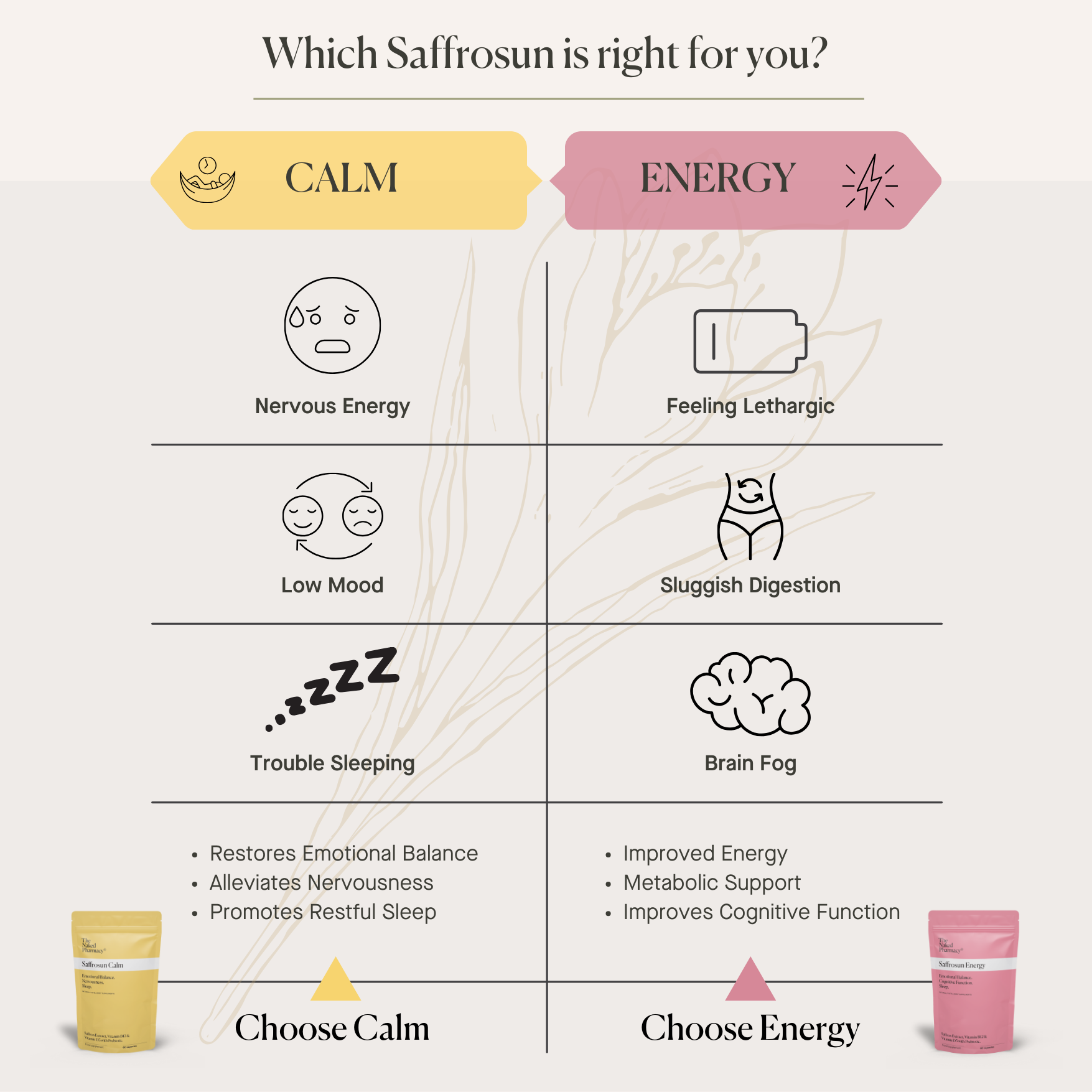
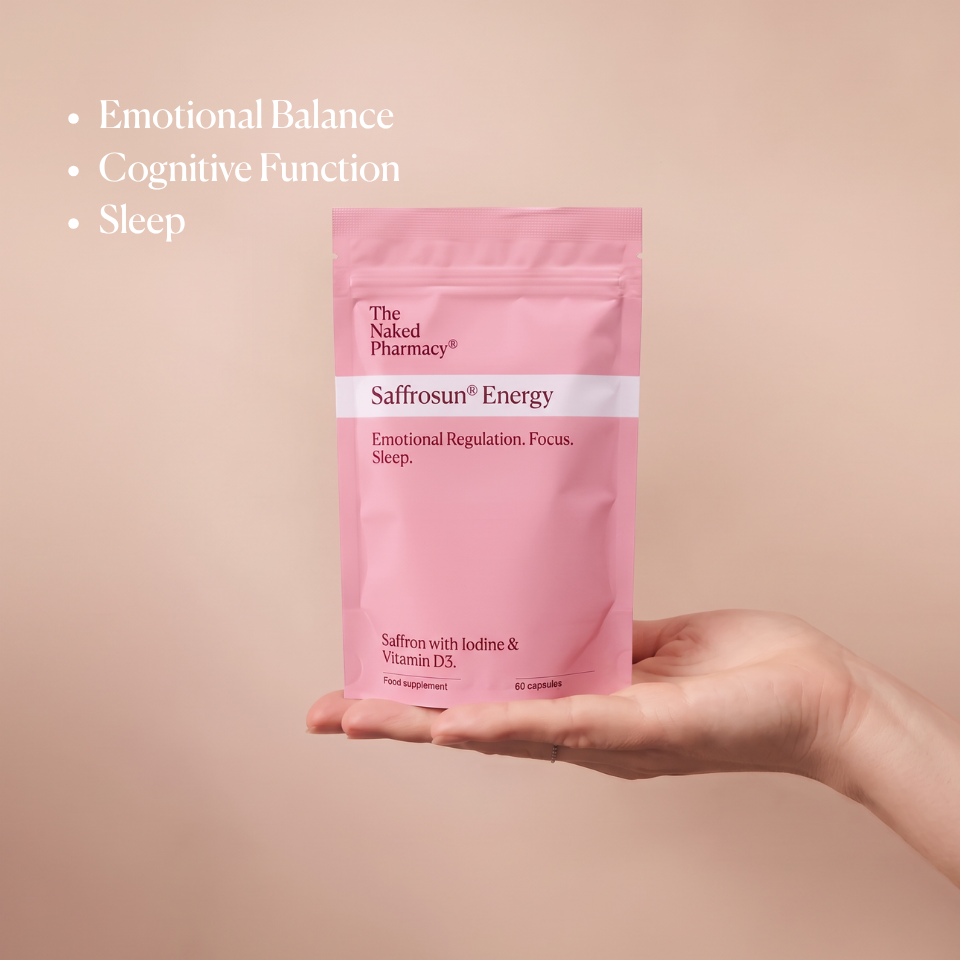
Saffrosun Energy is formulated to support energy and motivation, with iodine contributing to normal energy-yielding metabolism.
It can be particularly helpful when:
- Motivation dips
- Mental energy feels flat
- Winter fatigue is more “drained” than exhausted
5. Lower stress: protect sleep and motivation

Chronic stress is an energy thief. It disrupts sleep, nutrient absorption and metabolism making seasonal tiredness feel heavier and harder to shift.
Small changes include boundaries, breathing and realistic to-do lists. All these can have a surprisingly large impact on daily energy balance.
6. Light therapy for SAD: when to consider
Bright light therapy (often via SAD lamps) is used for:
- Seasonal low mood
- Morning fatigue
- Circadian rhythm support
It’s not magic cure though and isn’t for everyone. The NHS says there’s not enough evidence that it works and recommends contacting a medical professional first, and ensuring you get a good quality (non-flickering) light box with 10,000 lux being standard.
Book your free winter wellness support
Feeling tired in winter isn’t a character flaw. It’s about how our biology meets with modern living.
By supporting light exposure, sleep timing, stress balance and energy metabolism, you can boost energy naturally in winter without the need for constant coffee refills and box-set guilt (in fact, we think box sets can be a wholly acceptable medicine if taken in moderation).
If you’d like personalised advice, our registered pharmacists are always more than happy to chat anything through and support you built a winter wellness routine that works for you. Book a call here