If you’ve ever kicked off the New Year with the motivation to shed that Christmas indulgence, only to find by February you’re craving a glass of red and a six-pack of crisps, it’s because your biology has other ideas – and usually wins. This is at the heart of weight loss biology – and the real reason why weight loss is hard, even for the most motivated and disciplined people.
Discovering how to work with your biology and not against it through things like dieting, is your key to understanding why motivation alone won’t cut it. It’s time to shed the guilt and understand how your biology is the key to not overeating.
Why weight loss is so difficult

Your Hormones
Hunger isn’t a thought – it’s a hormone-driven signal and just a handful of hormones have a surprising amount of power over your appetite, cravings and energy levels:
- Cortisol - this is your stress hormone and increases appetite and cravings.
- Insulin - helps move glucose into cells; very high levels encourage fat storage.
- Ghrelin - turns up your hunger signals - often leaving you feeling even hungrier.
- Leptin - signals that ‘satiated’ feeling but during dieting or stress this signalling becomes less effective.
Trying to override these signals is almost impossible because your body isn’t wired that way.
Your body has a metabolic ‘set point’
From your body’s perspective, dieting looks a lot like famine.
The Metabolic Set Point Theory is widely discussed but not universally accepted. Many researchers describe this as a defended weight range rather than a fixed point. And it essentially means during times of weight loss, you can expect to experience:
- increasing hunger
- reducing energy expenditure
- ramped up cravings
That’s why the ‘just eat less’ is unhelpful – your biology sees restriction as a threat, not a plan.
Mitochondrial function and metabolism
Low energy isn’t laziness – it’s cellular.
Your mitochondria act as tiny power stations inside your cells. Ageing, poor sleep, stress and inactivity can reduce how efficiently they produce energy. The result?
- you’re more tired
- your metabolism slows
- movement feels harder
It’s another reason that willpower alone won’t cut it.
The Psychology of Eating: Why it’s not about discipline

Food is never just fuel. It’s everything from survival to comfort, habit to culture. Let’s take a look where these fit in …
Habits and Behaviour Loops
Post-dinner snacking, weekend overeating, mindless nibbling especially when stressed are all wired behaviours, triggered by cues and reward pathways. You can be rewired using the right strategies.
Cravings and emotional eating
Stress, low mood, anxiety and exhaustion push the brain towards quick energy and relief – that’s what our neurobiology is wired to do. Unfortunately, that usually means sugary or high-fat food.
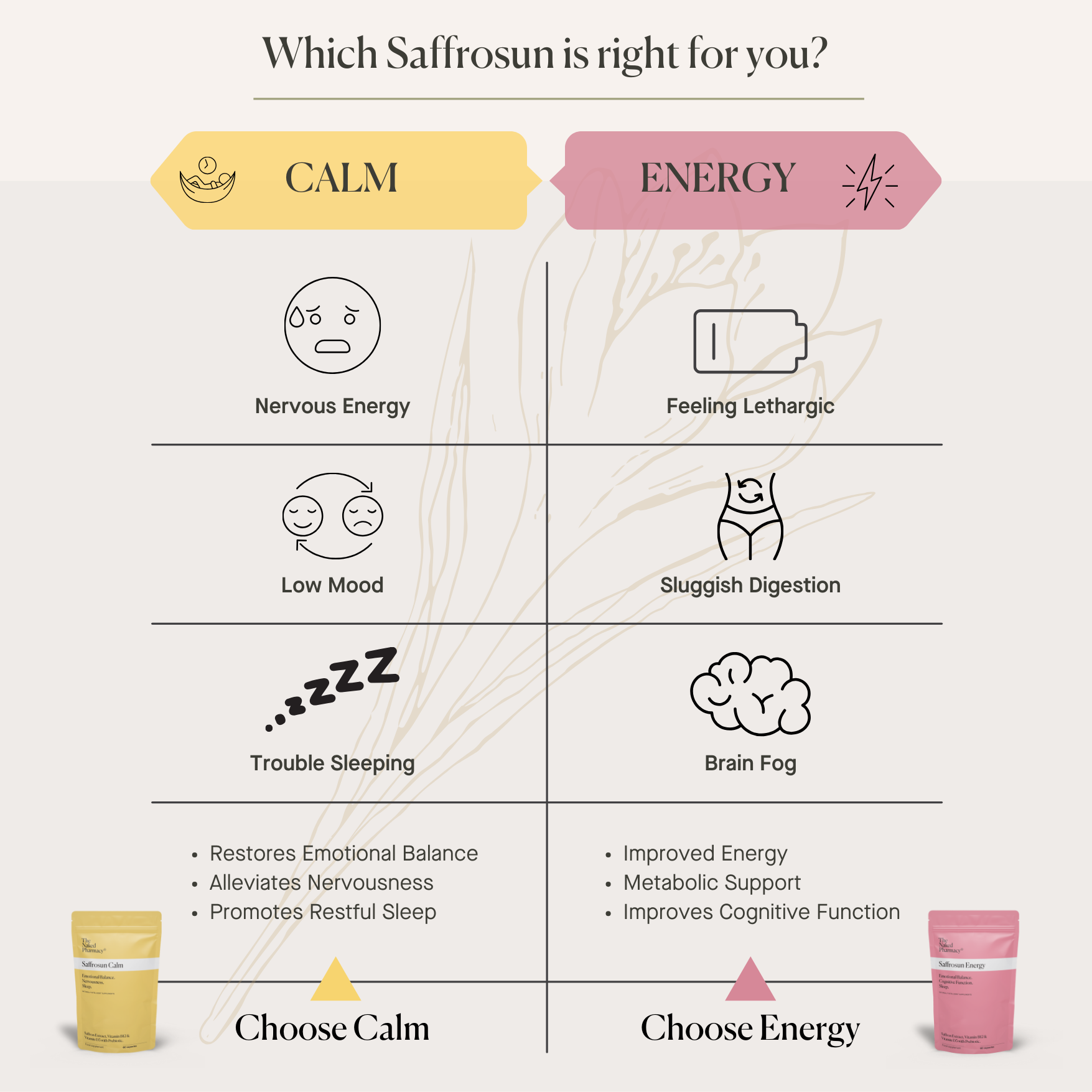
Saffrosun Calm is great at supporting mood balance and lowering stress, helping to reduce the emotional spikes that drive comfort eating.
Everyone’s relationship with food is different
Upbringing, environment, hormones, routines, workload and emotional history all shape how and why we eat. Weight is never as simple as motivation.
A Note on GLP-1 Medications
There’s growing use of GLP-1 medications, such as semaglutide, for weight management. They work by adjusting appetite-regulation pathways and are part of many people’s weight loss journeys. You can safely pair GLP-1 medications with Metabolic Gold, as they support different mechanisms in the body.
For deeper reading, explore our GLP-1 blog.
Our pharmacists are always available to guide your safe approach to taking supplements alongside GLP-1 medications.
Practical ways to work with your biology

1. Prioritise your sleep
Poor sleep raises ghrelin (hunger) and lowers leptin (fullness). A King’s College London review found that even a slight reduction in sleep increases next-day calorie intake by around 385 calories, mostly in the form of high-carb snacks.
Aim for:
- a consistent wake time
- a cool, dark room
- calming environments and nutrition before bedtime
2. Eat Protein, fibre and healthy fats
These nutrients:
- stabilise blood sugar
- reduce cravings
- keep you fuller for longer
Protein-rich breakfasts help take the edge off mid-morning hunger. Soluble fibre helps you feel fuller and supports the gut, while healthy fats help keep appetite and cholesterol on an even keel.
Together, these nutrients help steady blood sugar, dial down cravings and keep you satisfied for longer - making hormonal hunger easier to handle.
In short, balanced meals don’t just fill you up. They change how hungry you feel
3. Move daily – gently counts
Movement increases mitochondrial efficiency and improves metabolic health. You don’t need long gym sessions.
Effective daily movements for metabolism include:
- a 10-minute walk after meals
- stair-climbing
- stretching
- household chores
A University of Birmingham study found it’s short bursts (even 10 minutes) of regular daily movement, not intense occasional exercise, that improves cellular metabolism.
Small consistent movements beat occasional high intensity hits, every time.
4. Eat in-line your circadian rhythm
Your metabolism works best earlier in the day. The University of Surrey’s Sleep Research Centre found that eating more calories earlier supports:
- better glucose control
- reduced hunger
- more stable energy
Even if you’re not a morning person, your metabolism is. Surrey’s Sleep Research Centre found when you eat matters almost as much as what you eat.
5. Reduce stress
This is one we could all do with less of. Scientists at University College London say chronic stress increases abdominal fat deposition and intensifies food cravings.
Chronic stress increases cravings, raises cortisol, disrupts appetite signals and encourages abdominal fat storage. It also reduces your ability to make balanced decisions around food.
This is where Saffrosun Calm can help you maintain a steadier mood through the day.
Why willpower isn’t the answer

Restriction triggers biological responses that increase hunger and lower energy. Even the most disciplined person will struggle against these systems.
Long-term success comes from:
- steady sleep
- short daily intense exercise
- protein and soluble fibre
- stress support
- metabolic balance
Why Metabolic Gold Makes Sense

Stop fighting your body and start supporting it.
If weight management has felt like an uphill battle, you’ll know by now that’s it not your lack of willpower – it’s all about your biology. Metabolic Gold is designed to support metabolic health, appetite regulation and energy balance, working with your body rather than against it.
Support your metabolism the smarter way.
Find out more about Metabolic Gold
For personalised advice without any pressure book a free consultation with one of our friendly pharmacists to talk through your goals, medications and supplements and find what works with your biology.